
"coffee bean layers"
10000 article(s) found

Introduction to the taste manor of the variety producing area by the flavor description method of Kenya coffee bean
Kenya coffee bean practice flavor description method variety production area taste manor introduction in Cuba, the cultivation of coffee is regulated by the state. The best coffee growing area in Cuba is located in the Central Mountains. Because this area not only grows coffee, but also produces quartz, crystal and other precious minerals, it is also known as Crystal Mountain. At present, Crystal Mountain Coffee is the generation of top Cuban coffee.

Introduction to Grinding scale of Flavor description in Coffee Bean Manor in Kenya
Kenya Coffee Farm Flavor description Taste method Grinding scale introduces that the Kenyan government takes the coffee industry very seriously, where it is illegal to cut down or destroy coffee trees. Kenyan coffee buyers are world-class high-quality coffee buyers, and no other country can grow, produce and sell coffee on a continuous basis like Kenya. All the coffee beans are first made by Ken.

Daily brewing| What kind of water flow do you use to make coffee?
Professional coffee knowledge exchange More coffee bean information Please pay attention to coffee workshop (Weixin Official Accounts cafe_style) Some fans ask: Do you want to use large water flow for coffee, or small water flow? If the water injection is divided into three stages, the first stage: the water injection when steaming, the water injection when exhausting air, and the water injection when coffee powder precipitates. These three stages of water flow are basically somewhat different. Yimeng

Coffee knowledge Coffee growth cycle and picking
Coffee beans are the seeds of coffee trees. After three or four years of growth, the coffee tree matures and begins to bear fruit, with one fruit arranged in clusters or clusters along the branches. The outside of the seed is a layer of peel, which can be picked as soon as it turns red. Under the red skin (exocarp) there is a layer of pulp (mesocarp), which is a small thin layer, and then a layer of material endocarp like parchment. In

The making process of fancy coffee layered latte
1. Pour the coffee beans into a coffee grinder and grind them into medium-fine coffee powder. Put about 7 grams of coffee powder into a cooking wrench and flatten it out. two。 After the coffee powder is flattened, gently press it from the top with a powder press to spread the coffee powder evenly in the cooking wrench. 3. Then lift and use the powder press to rotate again until the coffee powder is flattened and compacted. 4. Light

What is honey treatment? Why is it called honey treatment? The difference between yellow honey, red honey and black honey
Professional coffee knowledge exchange more coffee bean information Please follow the coffee workshop (Wechat official account cafe_style) Coffee beans treated with honey will be graded according to the degree of retention of the pulp (from more to less): yellow honey, red honey, black honey (Honey Amarillo) the light time of raw coffee beans treated with yellow honey is the longest. A longer duration of light means a higher heat, so this

Costa Rican coffee famous for honey treatment. What is coffee honey treatment?
Professional coffee knowledge exchange more coffee bean information Please follow the coffee workshop (Wechat official account cafe_style) everyone who knows coffee knows that there are sun and water washing treatments, but what is the honey treatment that has sprung up in recent years? have you ever wondered what coffee honey treatment is? Is this coffee better than other treatments you are used to drinking? This article brings you to discuss what is honey treatment and honey treatment.

What's the difference between the treatment of coffee beans in the sun, washing and honey?
Professional coffee knowledge exchange more coffee bean information Please follow the coffee workshop (Wechat official account cafe_style) Coffee is mainly treated in three categories: sun drying, washing, and honey treatment. The sun drying method is to directly expose the coffee cherries before removing the shell and pectin layer; the water washing method is to screen the coffee pulp before exposure and ferment to remove the pectin layer; the honey treatment rule is between the sun.

Introduction to the Grinding scale of Flavor description for Coffee production in Kenya
Kenya Coffee Manor Flavor description Grinding scale introduction to the aforementioned, after the smoldering powder layer is washed away, when the water flows inward to the third concentric circle, the flow increases to 150% of the previous smallest flow. You will see that the powder below will continue to arch up, indicating a strong stirring, and then slowly inject water in the third concentric circle (note that it is a slow circle), about 4-5 times.
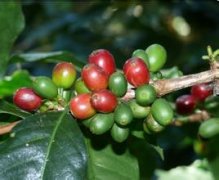
The growth cycle and picking of high-quality coffee
Coffee beans are the seeds of coffee trees. After three or four years of growth, the coffee tree matures and begins to bear fruit, with one fruit arranged in clusters or clusters along the branches. The outside of the seed is a layer of peel, which can be picked as soon as it turns red. Under the red skin (exocarp) there is a layer of pulp (mesocarp), which is a small thin layer, and then a layer of material endocarp like parchment. In

Grandma Lahuaoniu soaks layers? How to determine the degree of grinding of the cup test? Why does the bean grinder need to be cleaned?
Professional coffee knowledge exchange more coffee bean information please follow the coffee workshop (Wechat official account cafe_style) [question and answer 1] Q: the lines of the flower will be layered into a lump? A: when pulling flowers, the milk foam will be delaminated, which may be because the milk and the milk foam are not mixed well! Pulling flowers is not just about mixing milk and espresso. Before that, when milking

Steam milk and foam milk production Daquan what is the steam milk foam layering how to solve?
Professional coffee knowledge exchange more coffee bean information Please follow the coffee workshop (Wechat official account cafe_style) coffee knowledge-how to use the machine steam pipe to hit the milk foam is to use steam to beat the external air into the milk, and then beat it apart, without this external air, the steam will only heat the milk, not foam! Some coffee lovers asked about the household half.

How do you distinguish between yellow honey, red honey and black honey? why is there black honey, red honey, yellow honey?
Professional barista communication please follow the coffee workshop (Wechat official account cafe_style) yellow honey, red honey, black honey treatment, where is the difference? When you want to buy honey-treated coffee, you usually have the choice of yellow honey, red honey and black honey. You may have heard of these honey treatments to retain the percentage of pectin layer, and what does this mean? The coffee farmers' association classifies the coffee

The picking of coffee beans coffee beans are the seeds of coffee trees.
Coffee beans are the seeds of coffee trees. After three or four years of growth, the coffee tree matures and begins to bear fruit, with one fruit arranged in clusters or clusters along the branches. The outside of the seed is a layer of peel, which can be picked as soon as it turns red. Under the red skin (exocarp) there is a layer of pulp (mesocarp), which is a small thin layer, and then a layer of material endocarp like parchment. In

The steps of fine roasting coffee beans Technical degree Taste introduction
The steps of roasting coffee beans are summarized as stewing below 30, and adjusting according to the exhaust gas volume above 30. An important indicator of exhaust gas volume is the comparison between the speed of exhaust gas temperature rise and the speed of bean temperature rise. A general rule is that the exhaust temperature rises faster than the bean temperature, the bean taste will be clean but the flavor will be weak, the exhaust temperature rises faster than the bean temperature.
Coffee roasting knowledge Coffee roasting degree Classification
Espresso roasting: dark brown, depending on the degree of baking, the bean surface may have only a thin layer of coffee oil, or a thick layer of coffee oil. New England baking (New England): light brown, dried bean noodles. American baking (American): medium brown, dried bean noodles. Viennese baking (Viennese): medium dark brown with scattered drops of bean noodles

The bidding for Honduran boutique coffee is rich in layers, rich in tonality, thick and bright, is it Honduran coffee?
Honduras has unique geographical advantages, such as high altitude, microclimate, abundant rainfall, fertile volcanic ash soil, etc., which make Honduran coffee rich in layers, rich and bright in tone, and excellent in quality. The establishment of the best Honduran bidding Best of Honduras Late Harvest is mainly aimed at making coffee farmers more motivated to cultivate.

COE winning Manor Niagara Falls Manor introduces what is the flavor of coffee beans treated with red honey?
Professional coffee knowledge exchange more coffee bean information please pay attention to the coffee workshop (Wechat official account cafe_style) Nicaraguan coffee, in the raw bean varieties and post-processing are different, general coffee raw beans in the treatment can be divided into washing, sun, honey treatment. In terms of varieties, the more familiar is the large grain elephant bean (Maragogype). In recent years, it is even more popular with different products.

The growth cycle of coffee and picking coffee beans are the seeds of coffee trees.
Coffee beans are the seeds of coffee trees. After three or four years of growth, the coffee tree matures and begins to bear fruit, with one fruit arranged in clusters or clusters along the branches. The outside of the seed is a layer of peel, which can be picked as soon as it turns red. Under the red skin (exocarp) there is a layer of pulp (mesocarp), which is a small thin layer, and then a layer of material endocarp like parchment. In

Barista Skills "Professional Barista Manual"(IV) Drip coffee extraction
Chapter 3 Theoretical Science of Filtration and Extraction The author has researched and written this chapter to give baristas an understanding of the dynamics of Espresso filtration. Some readers will find this chapter enriching and engaging, others will feel their scalps tingle. The author believes that reading and absorbing the content of this chapter will have positive returns, and its most important significance lies in being able to filter most of the judgments.